Seasonal Form Cycles That Influence Accumulator Construction in Football, Tennis, adn Basketball Markets
Written by Sofia Schmid · Oct 29, 2026

Seasonal Form Cycles That Influence Accumulator Construction in Football, Tennis, adn Basketball Markets
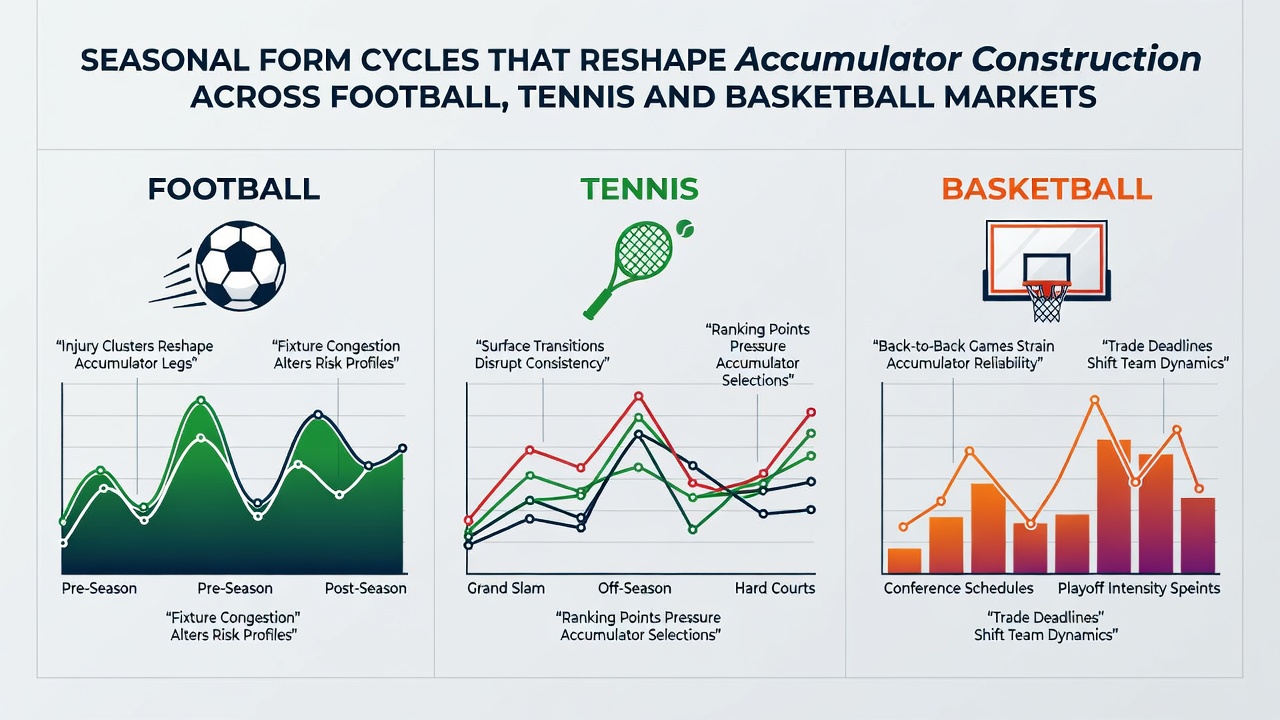
Seasonal shifts reshape how accumulators get built because player and team performance follows predictable rhythms tied to weather, schedules, and rest periods. Football leagues across Europe see early-season caution give way to mid-campaign surges, while tennis players adapt to surface changes that stretch from clay in spring through grass in summer and hard courts in autumn. Basketball campaigns, particularly the NBA which tips off each October, feature back-to-back stretches that drain energy and alter totals betting lines.
Football Calendar Effects on Multi-Leg Bets
European domestic seasons begin in August with squads still integrating new signings, and this produces lower scoring rates that influence over-under selections in accumulators. Data from the 2025-2026 Premier League campaign showed average goals per game rising from 2.6 in the opening six weeks to 3.1 by November once teams settled into rhythm. Observers note that December fixture congestion, with some clubs playing three matches in eight days, often triggers defensive lapses that flip handicap markets toward underdogs. Those constructing accumulators track squad rotation patterns because managers rest key attackers ahead of European ties, which reduces expected goal tallies and shifts value toward draw outcomes in certain fixtures.
Tennis Surface Rotations and Momentum Swings
Tennis grand slams follow a fixed surface sequence that forces players to adjust movement and shot selection, creating measurable streaks that accumulator builders exploit. Clay court specialists post win rates above 70 percent at Roland Garros according to ATP historical records, yet the same athletes often dip below 50 percent once the tour moves to faster hard courts in North America during late summer. Wimbledon grass produces shorter rallies and favors big servers, so tie-break props appear more frequently in multi-leg tickets. Researchers tracking 2026 data found that players who reached at least the quarterfinals in one slam carried elevated confidence into the next surface, boosting their implied probability in head-to-head markets by roughly four percentage points. Accumulator constructors therefore layer in-form surface specialists rather than chasing overall ranking points alone.
Basketball Schedule Density and Scoring Trends
The NBA regular season, which opens in October each year, packs 82 games into six months and creates distinct performance valleys. Teams on the second night of back-to-backs cover the spread at lower rates because travel fatigue reduces defensive efficiency. League-wide data compiled through the first month of the 2026-2027 campaign revealed that road teams playing consecutive nights allowed 4.8 more points per game than rested opponents. College basketball conferences follow similar patterns once conference play begins in January, with home teams posting higher totals after extended breaks. Accumulator bettors who pair rested home favorites with under totals on fatigued road squads capture correlated edges that single-sport tickets miss.
Cross-Sport Overlaps in October 2026
October 2026 brings simultaneous football league weeks, the final weeks of the US Open tennis hard-court swing, and the NBA tip-off, giving bettors a compressed window where form data overlaps across three markets. European football sides often face midweek Champions League fixtures that coincide with NBA opening night, and fatigue carries over into weekend selections. Tennis players who compete deep into the final major sometimes withdraw from early indoor events, which voids related accumulator legs unless builders insert last-minute alternates. Industry reports from teh European Gaming and Betting Association highlight that operators adjust accumulator payout tables during these crossover weeks to account for the higher correlation between fatigued squads and lower scoring outputs.
Building Accumulators Around Verified Cycles
Successful construction starts with segmenting each sport into distinct phases rather than treating entire seasons as uniform. Football accumulators benefit from weighting December and April clusters more heavily because historical goal trends spike during those congested or decisive periods. Tennis builders insert surface-specific filters that exclude clay specialists from hard-court parlays until their recent results confirm adaptation. Basketball totals gain reliability when paired with rest-advantage indicators rather than raw offensive rankings. Figures released by the National Collegiate Athletic Association demonstrate that conference games after winter breaks produce totals 7 percent higher than non-conference openers, giving multi-sport tickets a measurable lift when combined with rested football sides. Those patterns emerge consistently across multiple seasons because physiological recovery and tactical familiarity follow the same calendar each year.
Conclusion
Seasonal form cycles supply repeatable signals that accumulator strategies can incorporate across football, tennis, and basketball. Teams and athletes display measurable dips and surges tied to fixture density, surface changes, and rest gaps, and these patterns hold across recent campaigns. Data from governing bodies and academic tracking studies confirm the edges remain available when builders segment seasons into phases and align selections with verified rest and adaptation metrics.